Cleaning drones: from futuristic idea to specialist tool
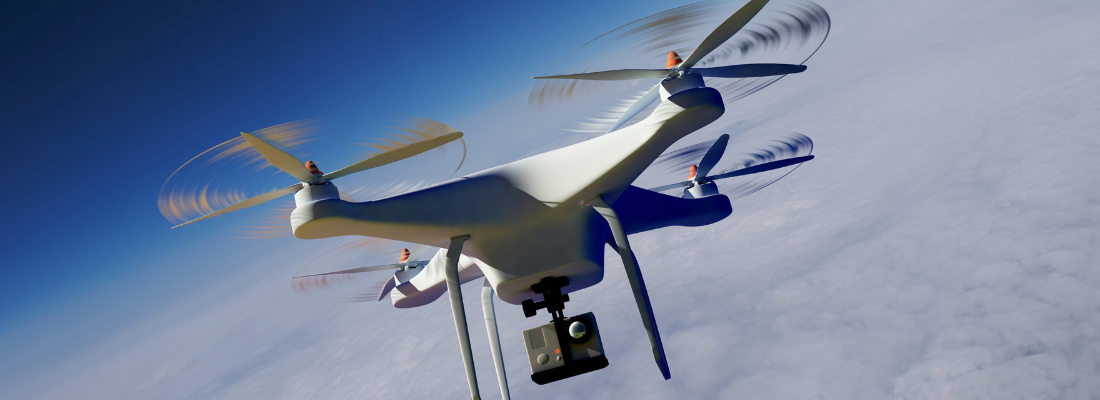
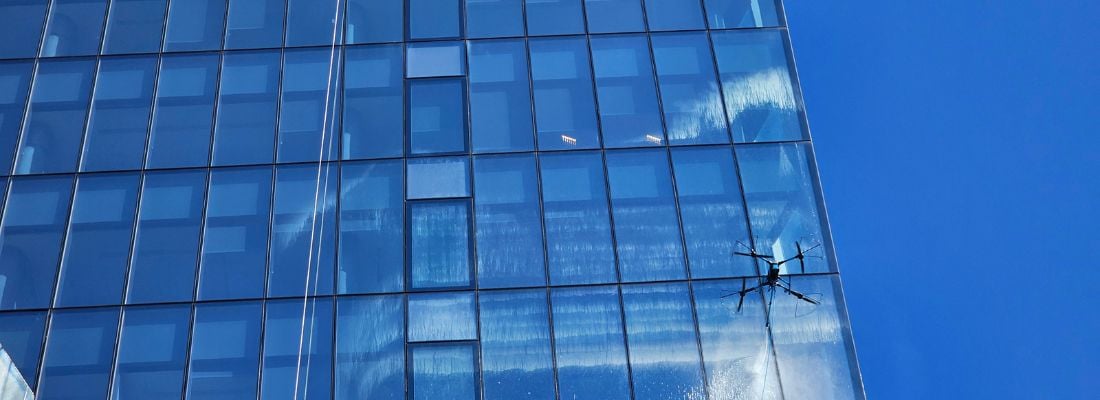
For several years, drones have been presented as a potential answer to some of the most difficult challenges facing professional window and façade cleaning. The technology has progressed from early prototypes towards increasingly practical applications, particularly where buildings are high, surfaces are extensive or conventional access is difficult.
The appeal is straightforward. If a machine can clean from the air while an operative remains safely on the ground, one of the industry's most persistent risks - working at height - can be significantly reduced. Drones can also potentially remove or reduce the need for scaffolding, cherry pickers and rope access - cutting the time, cost and disruption associated with setting up access equipment.
Specialist tool for particular applications
But drones are not about to replace conventional window cleaning. Their most credible role is as a specialist tool for particular applications where they offer a clear advantage.
The technology was initially associated largely with the idea of autonomous window cleaning: a flying device reaching difficult windows without putting a cleaner at risk. In practice, however, numerous challenges have limited this approach. Maintaining control of the machine, dealing with wind and other weather conditions, managing water and cleaning solutions and ensuring the safety of people and property below all have to be considered.
Evolution in how automation is being viewed by cleaning sector
As the technology has developed, attention has shifted towards applications where its advantages are clearest. Large façades, roofs and solar panels are particularly interesting, as are other surfaces that are difficult, expensive or hazardous to access using conventional methods.
This evolution also reflects a broader change in the way automation is being viewed within cleaning. Rather than attempting to automate every aspect of a task, technology can be used to remove the most hazardous or physically demanding element. An operative can remain on the ground to control or supervise the equipment, assess the results and manage the operation, while the machine carries out the cleaning in the difficult-to-reach location.
Fully autonomous cleaning some way off
That distinction is important. Fully autonomous cleaning remains some way off, particularly for complex buildings and high-rise environments. Safety considerations extend beyond the machine itself to the surrounding area. Wind conditions, falling equipment, pedestrians, traffic, water overspray and the need to establish exclusion zones can all affect whether a drone is practical.
There is also a question of economics. For a relatively straightforward building, conventional window-cleaning equipment may remain quicker and more cost-effective. A drone becomes more attractive where the alternative requires substantial access equipment, specialist working-at-height techniques or significant disruption to the building and its surroundings.
How do we make cleaning safer without removing the need for skilled people?
The potential applications are consequently broadening. In addition to windows and façades, drones can be used for roofs, solar installations and other large surfaces. This could be particularly valuable for buildings where regular inspection and cleaning are required but physical access is challenging.
The technology also offers an interesting response to one of the industry's wider challenges: how to make cleaning safer without removing the need for skilled people. Rather than replacing the cleaner, drones can change where the cleaner works. The operative moves from the building façade or roof to a position on the ground, controlling, monitoring and quality-checking the cleaning process.
So where does that leave cleaning drones?
They are unlikely to become the standard solution for everyday window cleaning, where established methods remain effective. Their value lies in solving specific problems that conventional approaches struggle with.
The future is therefore likely to be specialised rather than universal. As drones become more reliable, easier to control and better adapted to cleaning applications, their use is likely to expand – particularly for high-rise façades, roofs, solar panels and other difficult-to-access surfaces.
The most significant development may ultimately be not autonomous cleaning, but safer cleaning: using technology to take people out of hazardous environments while retaining the judgement, supervision and expertise of a professional cleaner.
Receive the best newsletter on cleaning & hygiene - straight to your inbox!
We promise never to send you spam and you can unsubscribe at any time!