Easy-to-reach solutions for hard-to-reach areas: What can we learn from Teinnova’s specialist cleaning technology
The technology and equipment used for this work make a real difference to both the quality and the consistency of the results. For cleaning companies, choosing the right tools is therefore a practical decision that affects how reliably they can serve their clients.
Commercial kitchen exhaust systems and HVAC ventilation systems each present a different problem. Kitchen extraction systems deal primarily with grease build-up, which is sticky, dense, and hard to remove once it has settled. HVAC systems, by contrast, are concerned with maintaining clean air distribution networks, and their internal surfaces collect dust, debris, and microbial growth rather than grease. The two applications call for different approaches, and the right method depends on the specific system, its operating conditions, and its maintenance requirements.
Case Study: Matching the Method to the Challenge
Specialist cleaning is not a one-size-fits-all process. Kitchen extraction and HVAC systems collect different types of contamination, often across extensive duct networks that are difficult to access and inspect. Effective cleaning depends on understanding the deposits and choosing a method that can remove them thoroughly.
Removing stubborn grease from kitchen extraction systems
Kitchen extraction systems collect grease from cooking fumes. It can build up on filters, hoods, plenums, duct walls and extractor fans, becoming increasingly difficult to remove over time. Much of this contamination is hidden inside ductwork, beyond the reach of routine manual cleaning.
The TEGRAS approach from Teinnova combines foam application with rotary brushing to tackle this build-up. Foam is applied to greasy surfaces to help the cleaning solution remain in contact with deposits and break them down. Rotary brushes then provide the mechanical action needed to detach stubborn grease from internal duct walls. Brushes can be selected to suit different duct dimensions and configurations, helping operators reach areas that would otherwise be difficult to clean.
Combining chemical and mechanical action is important: foam helps loosen the deposits, while brushing removes them from the surface. The process is designed to address contamination inside the extraction system, rather than just the parts that are easy to see and reach. Inspection also helps operators assess the condition of the ductwork and check the areas that have been cleaned.
Removing dust and debris from HVAC ventilation systems
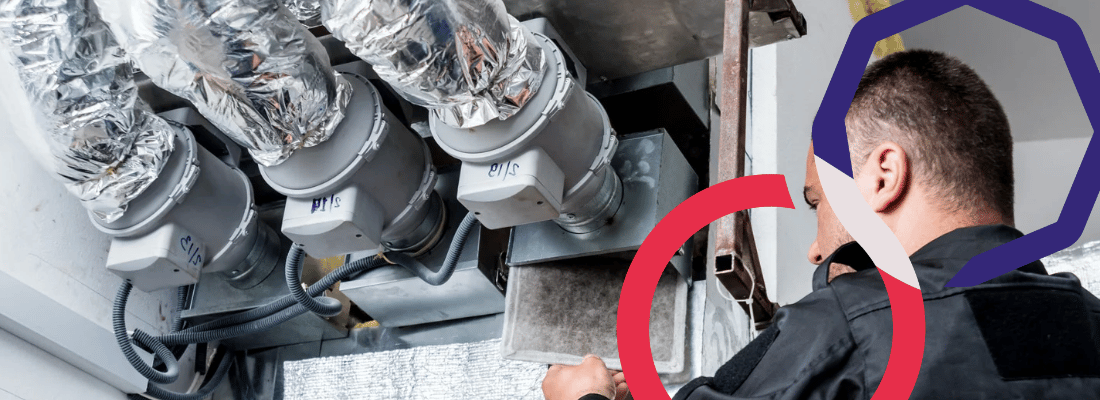
HVAC ductwork presents a different challenge. Instead of sticky grease, its internal surfaces collect dust and loose debris across networks that may include long runs, bends, changes in diameter and awkward access points. The priority is to dislodge the contamination and then remove it from the system.
Teinnova’s TECAI approach uses compressed-air cleaning, brushing and robotic equipment to tackle these areas. Compressed air helps disturb and move accumulated particles along the ductwork. Where deposits need more direct mechanical action, rotary brushing agitates contamination from the internal surfaces. The choice of method depends on the duct configuration, the type and amount of debris, and how accessible the affected section is.
Robotic equipment can help operators work in sections that are difficult to reach directly, while integrated inspection tools provide a view inside the duct. This makes it easier to identify areas that need attention, monitor progress and assess the condition of the system. Dislodging dust is only part of the task: the loosened material must also be collected and removed appropriately to avoid simply redistributing it elsewhere.
Why This Matters for Cleaning Companies
For a professional cleaning business, the practical value of this kind of technology is straightforward. Equipment that reduces manual labour, improves access to difficult areas, and produces more consistent results means jobs can be completed more efficiently and to a higher standard.
The method matters as much as the equipment. Choosing the right brush, applying foam where grease is present, using compressed air where appropriate and inspecting the ductwork all contribute to a more systematic process. This is particularly important when much of the work takes place out of sight, where clients cannot easily judge the condition of the system for themselves and that’s where Teinnova come in with pre-purchase to post-purchase care and guidance.
The Practical Takeaway
For cleaning professionals, the decision about which technology to invest in is not really about the equipment itself. It is about whether the tools allow you to do the job properly, consistently, and efficiently across the range of systems you encounter. Specialist cleaning technology, combined with the training and support needed to use it well, offers a way to meet those demands.
Teinnova's TEGRAS and TECAI are examples of how purpose-built equipment can address the specific challenges of kitchen exhaust and HVAC cleaning. For technical cleaning companies, adopting this kind of approach is less about keeping up with the latest products and more about being able to offer clients a dependable, high-quality service in a competitive market.
Receive the best newsletter on cleaning & hygiene - straight to your inbox!
We promise never to send you spam and you can unsubscribe at any time!