The weight of the job nobody sees: Why window cleaning is overdue for an ergonomics rethink
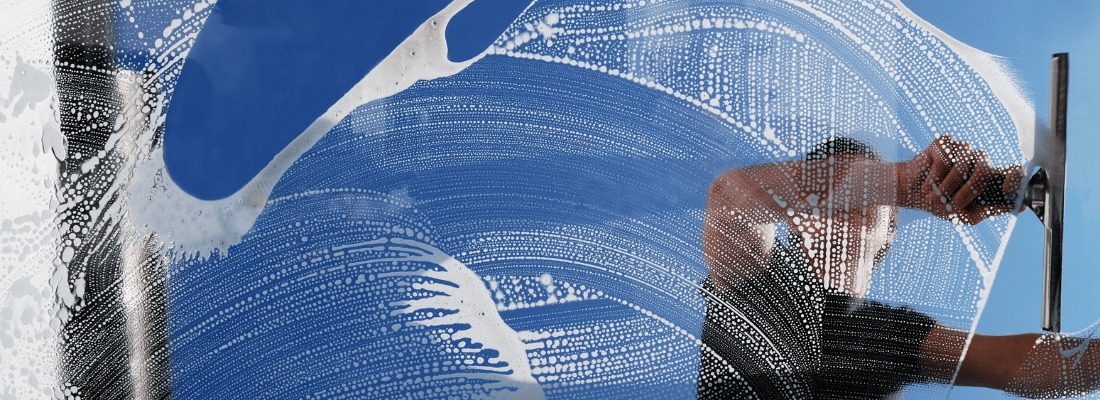
Window cleaning looks straightforward from the ground. In practice, much of the job happens with a telescopic pole held above shoulder height for hours at a stretch, and that position puts steady pressure on the neck, shoulders, back and arms. Over a full shift, that shows up as fatigue, lost precision and a higher risk of injury.
For cleaning companies, this isn't just a comfort issue. It affects how long staff can hold demanding roles, how consistent their work stays through a shift, and how much absence and turnover cut into already tight margins.
i-team Global kept hearing this from the companies it works with, so the question became whether the load could come off cleaners without abandoning methods that already worked, or slowing them down.
Ergonomics doesn't get the same attention as automation or digital tools, but it's exactly what the Workforce & Ergonomics category this year's Amsterdam Innovation Awards chose to emphasise. Under this category, i-team Global was nominated for the i-suit Pro, an ergonomic support system built directly out of that strain problem.
Case study: How i-team Global is taking the strain out of the job
The i-suit Pro was designed for window cleaners who spend much of their working day handling water-fed telescopic poles.
"Their key problem is physical strain," the company says.
Hours above shoulder height wear down the upper body in a way that's hard to avoid. Comfort and precision slip first, then productivity, and the risk of injury climbs the longer the pattern continues. Until now, cleaners have carried the full weight and movement of the pole using their own strength, task after task.
"Physical overload can lead to pain, lower productivity, mistakes, reduced job satisfaction and a higher risk of injury," the team explains.
Employers feel it too, from higher absence to the challenge of keeping experienced staff in demanding roles.
Designed to work with the technique, not against it
i-team Global didn't want cleaners to relearn their job, so the i-suit Pro was built to sit underneath the techniques they already use.
It combines an ergonomic harness, curved support tube, pole clamp and elastic support cords, moving part of the load off the arms and shoulders and onto the centre of the body. What sets it apart is that it adapts to the cleaner, not the other way around.
"The i-suit Pro does not replace the window cleaner or make the work more complicated. It supports the natural cleaning movement."
Real jobs rarely look tidy. Parked cars, fences and awkward façades call for short, controlled adjustments rather than long sweeps, so the system stays compact enough to keep the pole fully under control.
The difference by the end of a shift
For i-team Global, the clearest sign the design works isn't how fast cleaners finish but how they feel when they do.
"The most important result is that window cleaners experience less physical strain and more control during repetitive work."
Users maintain steadier brush contact, the company reports, while fatigue in the shoulders, neck and back drops off, letting cleaners hold their form through a longer shift with fewer stops. That matters for employers too, since comfortable staff stay productive and demanding roles become easier to sustain over a career.
What this points to industry-wide
Being shortlisted for an Amsterdam Innovation Award extended the conversation well beyond the trade show floor.
"The nomination has given the i-suit Pro extra visibility and credibility in the professional cleaning market," the team says.
Since then, i-team Global has fielded conversations with distributors and cleaning companies asking similar questions about ergonomics. Wellbeing on the job is no longer secondary to output, and it's the kind of shift that continues to be pushed to the forefront of cleaning innovation.

Receive the best newsletter on cleaning & hygiene - straight to your inbox!
We promise never to send you spam and you can unsubscribe at any time!