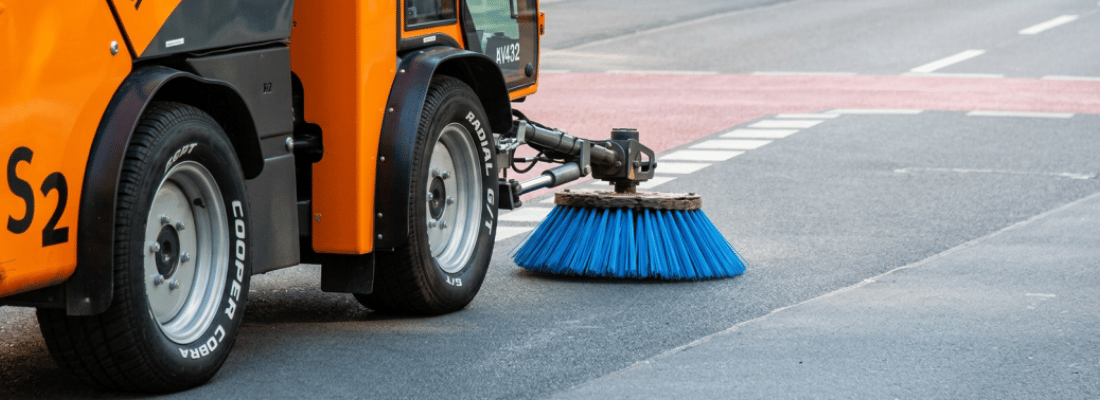
Street sweeping: meeting the demands of the modern city
Keeping streets clean has always been a core responsibility for municipalities, but today's sweeping fleets are increasingly expected to contribute to wider environmental, operational and sustainability objectives. As urban authorities face growing pressure to improve air quality, reduce emissions and operate within tighter budgets, manufacturers continue to develop machines that deliver greater efficiency while addressing changing customer priorities.
Street sweepers remain the primary solution for removing leaves, grit, litter and other dry debris from roads, pavements and public spaces. However, their role has expanded beyond simply improving appearance. Effective sweeping can help prevent debris entering drainage systems, reduce airborne dust and contribute to cleaner, safer environments for residents, workers and visitors alike.
Air quality key consideration in design
Air quality has become an increasingly important consideration in machine design. Municipalities are paying closer attention to the capture of fine dust particles generated by road traffic, construction activity and general urban wear. As a result, manufacturers have continued to improve filtration systems and dust suppression technologies that minimise the release of particles back into the atmosphere during sweeping operations.
Water efficiency is another area of ongoing development. Rather than relying on large volumes of water, many modern sweepers use controlled spray systems that optimise dust suppression while reducing overall water consumption. This allows machines to remain productive for longer periods between refilling while supporting wider sustainability objectives.
Municipalities choose mix of battery and diesel fleets
The transition towards lower-emission vehicles is also influencing purchasing decisions. Battery-powered street sweepers are becoming increasingly common, particularly in city centres, pedestrianised areas and locations where reduced noise is desirable. Advances in battery technology have improved operating times, making electric machines a viable option for many daily municipal cleaning tasks. However, diesel-powered sweepers continue to play an important role for longer routes, heavier-duty applications and locations where charging infrastructure remains limited. Consequently, many local authorities are adopting mixed fleets to meet differing operational requirements.
Alongside environmental considerations, total cost of ownership remains a key factor when selecting equipment. Buyers are evaluating not only purchase price but also maintenance requirements, energy or fuel consumption, service intervals and expected machine life. Easy-access service points, simplified maintenance procedures and durable components all contribute to reducing downtime and improving productivity over the lifetime of the machine.
Modern sweepers prioritise the operator
Operator welfare has also become a higher priority. Modern sweepers typically feature improved cab ergonomics, enhanced visibility, intuitive controls and lower in-cab noise levels to reduce fatigue during long working shifts. Safety technologies, including camera systems, proximity sensors and improved lighting, are increasingly available to assist operators working in busy urban environments.
Technology is playing a growing role in fleet management. Telematics systems allow fleet managers to monitor machine performance, schedule preventative maintenance and analyse utilisation data, helping authorities make better-informed decisions about fleet deployment and replacement. Route optimisation software can also improve operational efficiency by reducing unnecessary travel and fuel consumption.
Versatile machines enable year-round use
Versatility continues to be another important purchasing consideration. Compact machines capable of operating in narrow streets and pedestrian areas complement larger sweepers designed for main roads, industrial estates and transport hubs. Many models can also be equipped with seasonal attachments, allowing municipalities to maximise machine utilisation throughout the year.
As expectations of urban cleanliness continue to evolve, street sweepers are increasingly viewed as part of a broader environmental strategy rather than simply a cleaning tool. Developments in electrification, dust control, digital fleet management and operator safety demonstrate how the sector is responding to changing customer requirements. While priorities vary between municipalities, the emphasis remains firmly on delivering cleaner streets, improving operational efficiency and supporting longer-term sustainability objectives.
Written by Michelle Marshall, Editor in Chief at European Cleaning Journal


Receive the best newsletter on cleaning & hygiene - straight to your inbox!
We promise never to send you spam and you can unsubscribe at any time!