The hidden cost of hand hygiene: Why battery maintenance is becoming a facilities problem worth solving
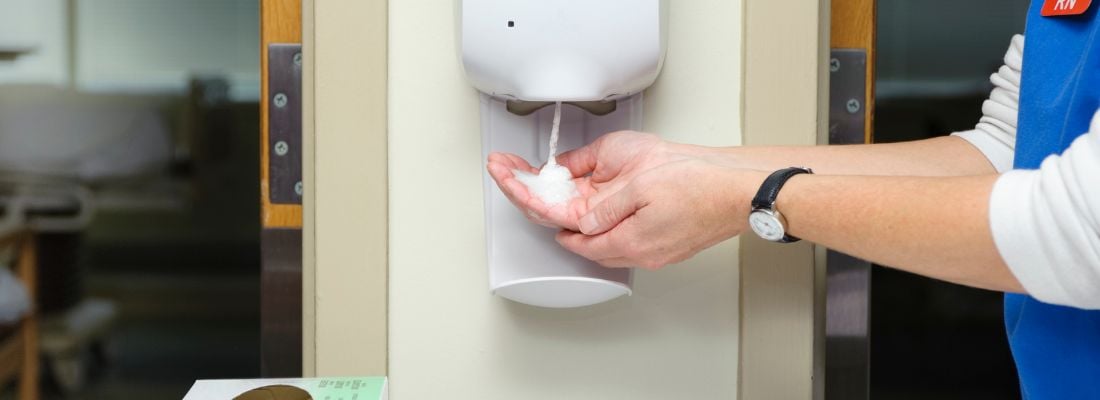
Facilities teams rarely think about hand sanitiser dispensers until one stops working. Across hospitals, offices and transport hubs, hundreds of touch-free units need to run at all times, and behind that reliability sits one unglamorous job. Someone has to keep the batteries charged.
A single site can have dozens, sometimes hundreds, of dispensers. Swapping out batteries across all of them takes real time and labour, a cost that rarely shows up in the original purchasing decision. It also runs against a pressure most organisations now face, since buildings are expected to cut waste and improve their environmental performance, and disposable batteries sit awkwardly against that goal.
This tension between reliable hygiene and mounting maintenance and sustainability demands has persisted in the industry for years, as purchasing decisions increasingly weigh long-term running costs alongside hygiene performance itself.
The Interclean Amsterdam Innovation Awards recognise the ideas addressing challenges like this one, spotlighting the technologies pushing the industry toward smarter, more sustainable solutions each year. One recent nominee in the Hygiene & Health category shows what that shift looks like in practice.
Case study: OPHARDT Hygiene rethinks how a dispenser is powered
OPHARDT Hygiene works primarily with healthcare providers, where dependable hand hygiene helps prevent healthcare-associated infections. Offices and public buildings run into the same maintenance problem, one the company kept hearing about from facilities managers.
"A major challenge was the regular replacement of batteries," the OPHARDT team explains.
Rather than looking for batteries that last longer, OPHARDT asked whether the dispenser needed them at all. Its PRAESIDIO® touch-free disinfectant dispenser is the first to rely on a fuel cell instead of batteries, built on what the company calls a consistently sustainable concept.
A maintenance problem, not just a product opportunity
Battery-powered dispensers are flexible, but maintaining them at scale means ongoing servicing that adds up quickly. PRAESIDIO® was designed to cut maintenance and shrink the environmental footprint, without changing anything about how facilities teams operate day to day.
At the centre of the solution is the integrated PRAESIDIO Fuel Cell. Rather than relying on batteries or an external power supply, the system converts a small amount of the alcohol-based sanitiser into electrical energy, using oxygen from the surrounding air to generate the power needed for touch-free operation. The fuel cell sits within the dispenser housing, forming a compact, self-contained unit.
In practice, the technology stays invisible to the people who matter most. Users simply access a touch-free dispenser as they always have, while maintenance teams no longer need to include battery replacement in their routine servicing.
How fuel cell dispensers cut battery waste and maintenance
Most touch-free dispensers today rely on disposable batteries or a mains power connection. By removing that dependency, PRAESIDIO® takes a recurring maintenance task off the schedule entirely and helps organisations cut down on battery consumption and waste. OPHARDT reports overwhelmingly positive early feedback, with customers describing the dispenser as an innovative solution that also delivers meaningful sustainability benefits.
What this signals for the wider industry
Being nominated for an Amsterdam Innovation Award extended the conversation for OPHARDT well beyond the exhibition floor.
"Thanks to our nomination for the Amsterdam Innovation Award, we received a great deal of attention right there at the trade show," the team says.
That attention brought interest from industry media, along with new conversations with customers and partners looking for similar sustainable hygiene solutions. But the more telling shift is in what those conversations are actually about. Maintenance cost and battery consumption are coming up earlier in procurement discussions now, before hygiene performance is even settled, rather than as a detail dealt with after a contract is signed.

Receive the best newsletter on cleaning & hygiene - straight to your inbox!
We promise never to send you spam and you can unsubscribe at any time!